


Neon Nightscape: When the Desert Holds Its Own Light
Apr 01, 2026
After spending time exploring softer light, I felt myself pulled back toward something brighter.
Not louder, exactly. Just more present.
More alive inside the scene.
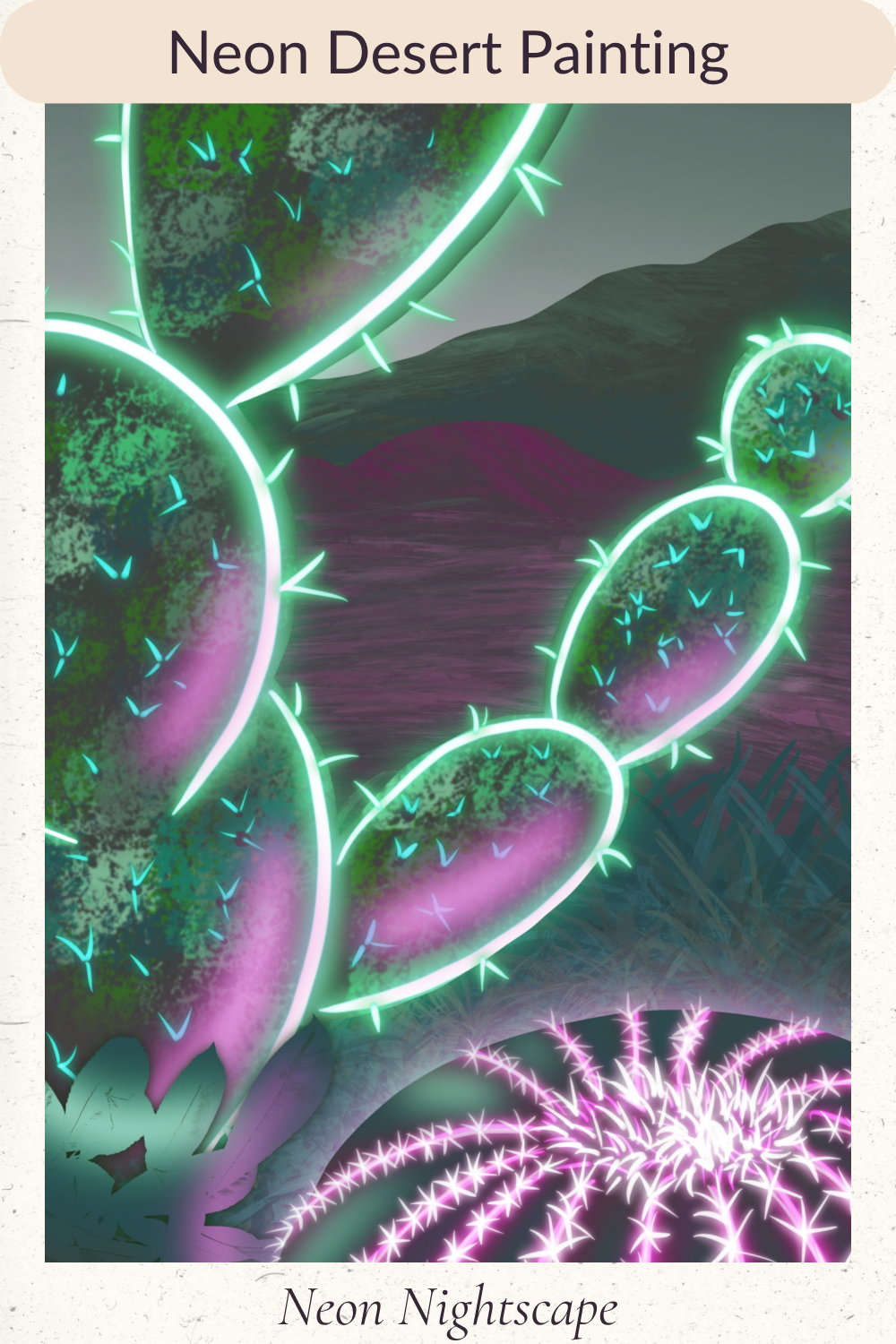
Night in the desert has a way of doing that.
Once the sun is gone, the landscape doesn’t disappear. It shifts. Shapes soften, colors deepen, and certain parts of the desert begin to feel like they are holding onto light rather than reflecting it.
That was the feeling I carried into Neon Nightscape.
A prickly pear, glowing softly against a quiet desert night.
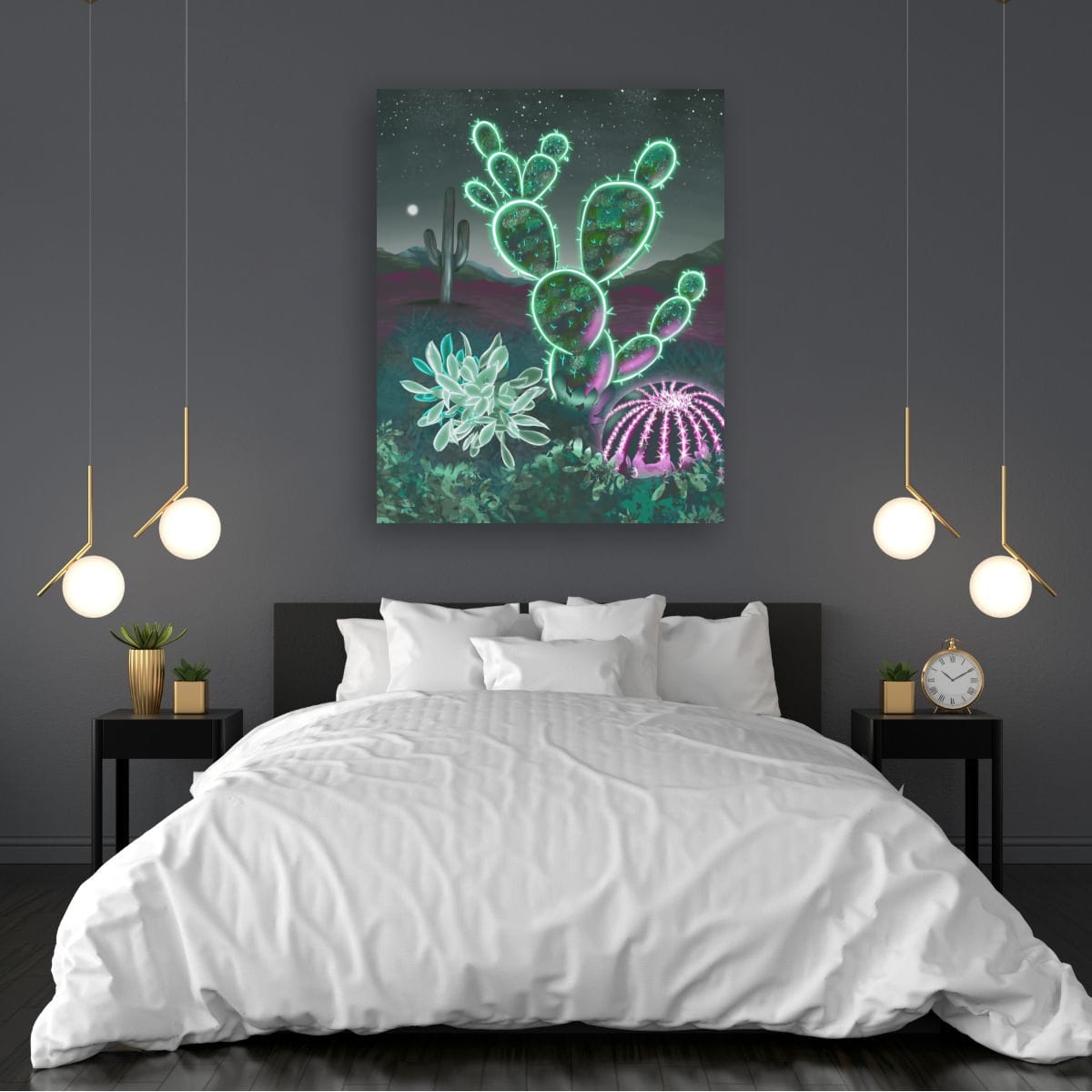
I had just finished a piece centered around balance and transition, where warm and cool light shared the same space. This time, I wanted to return to glow, but approach it differently. Instead of treating light as something sitting on top of the cactus, I started wondering what it would feel like if the plants carried that light within them.
The prickly pear felt like the right place to begin.
In real life, those pads already shift in color depending on the light. Sometimes they lean green. Other times they drift into soft purples, especially in the Arizona desert at night. That natural color change gave me a way in.
I kept the neon edge subtle around the pads so the cactus itself could stay the focus. The glow traces the form, but it doesn’t take over. Inside the pads, hints of pink and violet feel absorbed rather than applied. The result was a cactus that feels like it is quietly lit from within.
Like something holding onto warmth long after the day has passed.
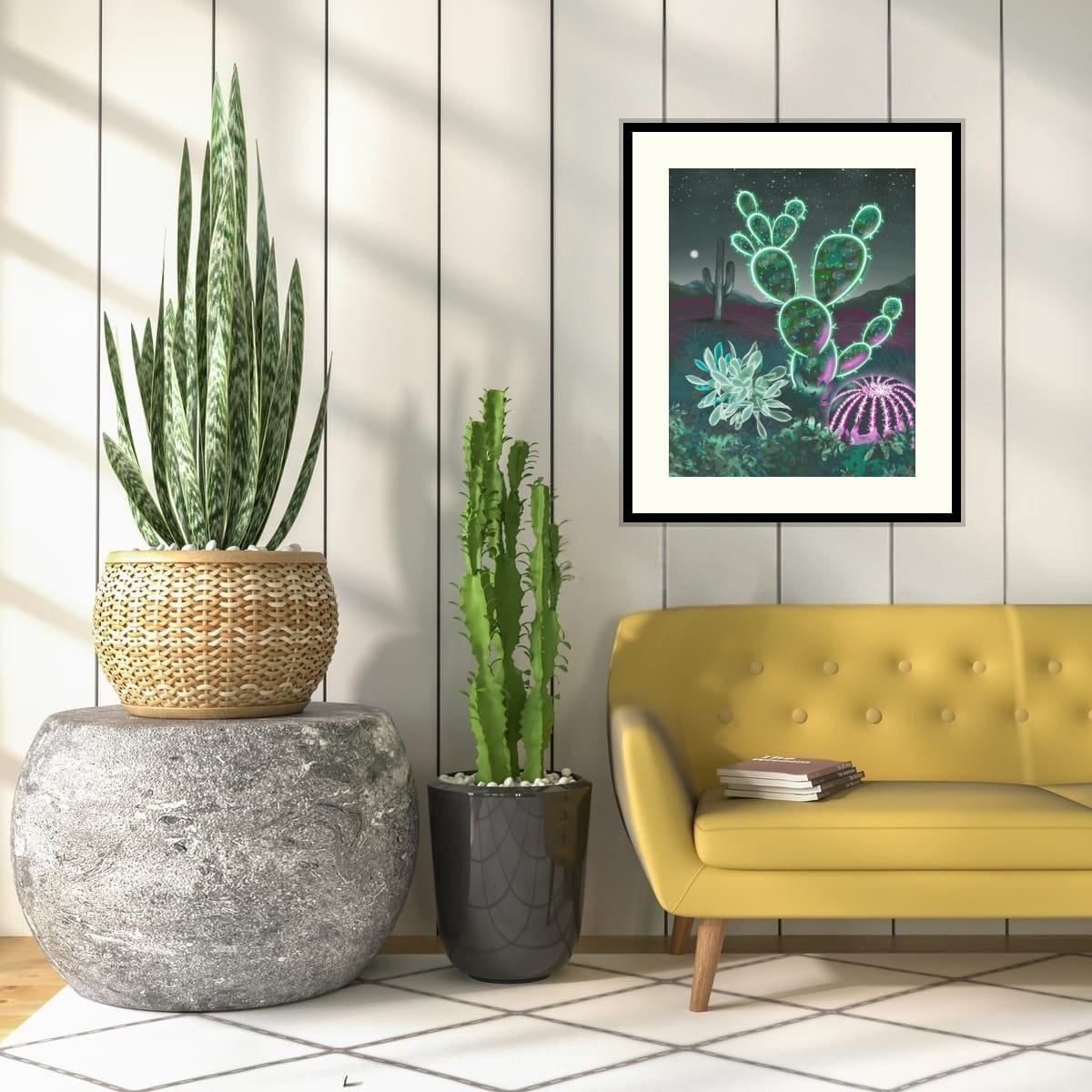
I approached the rest of the scene with that same idea.
The barrel cactus in the foreground carries a brighter pink glow, but even there, I tried to let the color sit inside the structure instead of floating above it. The agave nearby holds a cooler, softer light, which helps balance the composition without pulling attention away from the prickly pear.
The process became a series of small adjustments.
Layering glow, then pulling it back.
Brightening an edge, then softening the center.
I was trying to make sure everything still felt like the same night.
There was a moment that surprised me while working on this piece.
At one point, the glow felt too separate from the plants, almost like it belonged to a different world. When I softened the edges and let the color sink into the forms, everything shifted. The scene stopped feeling like neon placed on top of a desert and started to feel like the desert itself had changed.
That was the turning point.
You can see it in how the light moves across the landscape. The prickly pear draws you in first, but the glow continues outward in smaller ways through the surrounding plants. Even the distant saguaros stay quiet, holding their place in the Southwest landscape without competing for attention.
This piece feels grounded in the Arizona desert at night, but it leans just slightly into something imagined. Not a different place, just a different way of seeing the same one.
It’s part of a thread I keep returning to—looking at the desert at night and how the light changes. If you're curious about the other pieces in this series, you can explore those here.
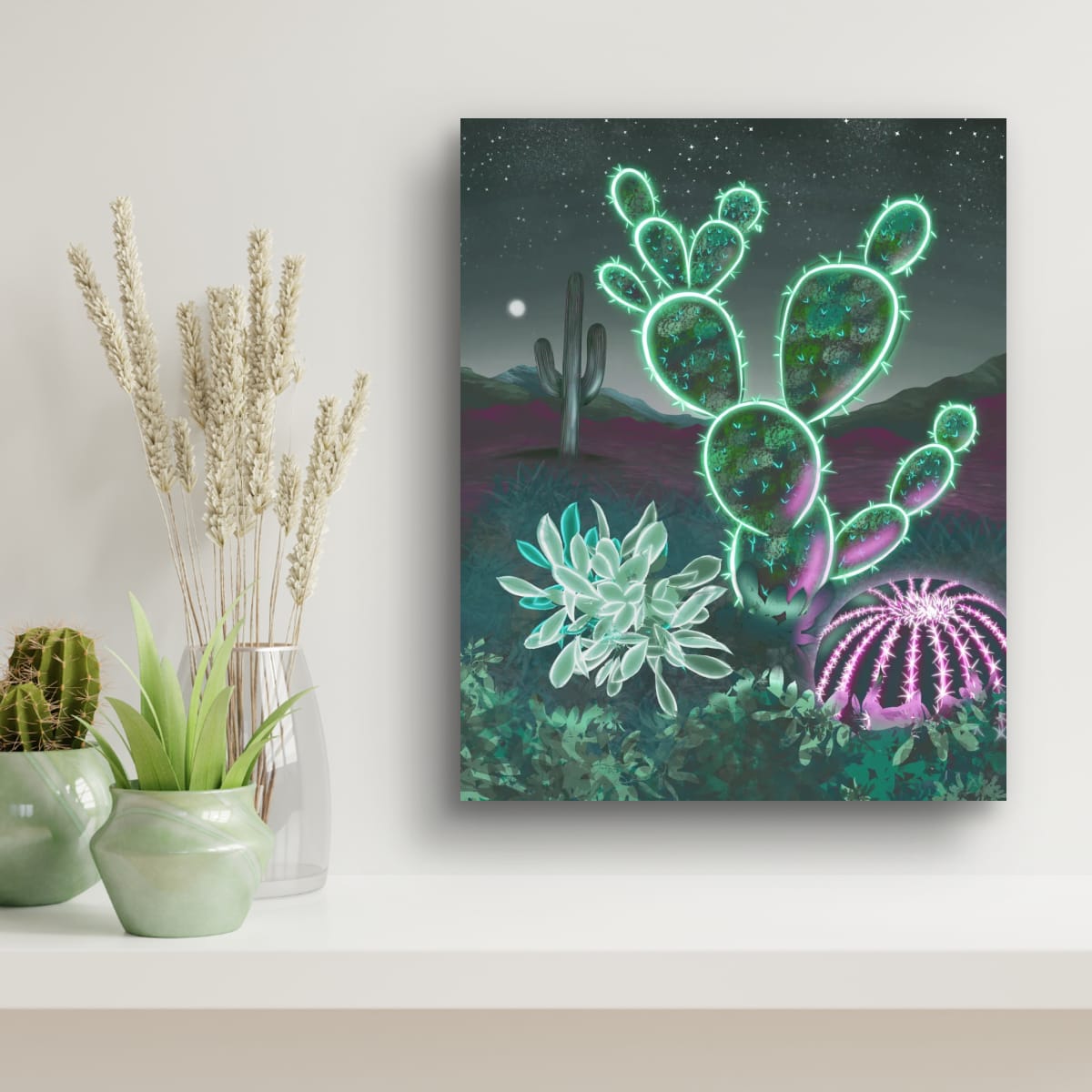
In Neon Nightscape, I was exploring what happens when light becomes part of the landscape instead of something added to it.
If you’re curious how the light moves across the entire scene, you can explore the full piece here.
If you’d like to keep exploring this kind of night, you might also enjoy these:
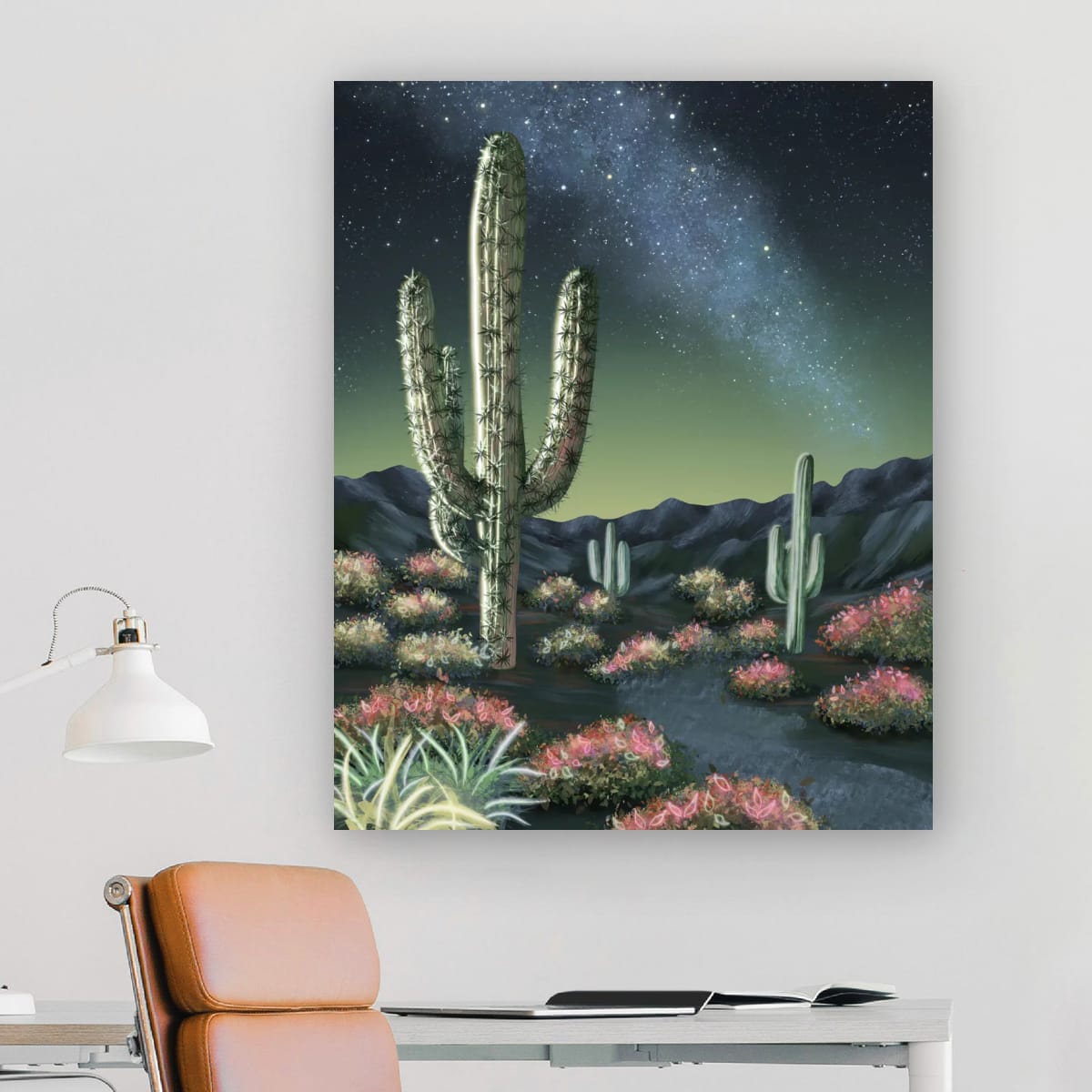
Starry Cactus Dream - (shown above)
You might also enjoy this one. It's a brighter evolution of Neon Nightscape.